

Get a large mug of coffee and brace yourself for a guidebook that you may want to bookmark.
Dining out with family or friends has grown exponentially, and the Internet has become an increasingly important part of how customers choose restaurants. This reach into customers’ everyday lives has forced restaurants to rethink their online strategies.
Today, we’re looking at restaurant website design trends and some of the details and resources worth considering when planning a restaurant website.
Why Are Restaurant Websites Scary?
Who really wants to see a photograph of the chef on the home page of a restaurant website? As a customer, are you primarily interested in what the staff looks like?
Most people visit a restaurant website to find the menu, get an idea of the atmosphere, check prices, find the location, see the hours, and decide whether they want to visit.
Visitors can tolerate an older-looking website if the existing design still helps them quickly find the information they’re looking for.
What Restaurant Websites Often Emphasize
- How the chef prepares the food.
- How the restaurant hires its staff.
- Long descriptions of the surroundings.
- How friendly the manager is.
- Staged photographs of customers eating.
- A long letter from the owner.
- Contact information that is difficult to copy or use.
- Background music that automatically plays.
What Visitors Actually Need
- A detailed menu.
- Current prices.
- Ongoing offers and specials.
- Recent, authentic photographs.
- The restaurant location with a link to Google Maps.
- Hours of operation.
- Parking information.
- A working reservation option.
Restaurant websites often try so hard to look “cool” that they forget what visitors are actually looking for.
What the Numbers Say
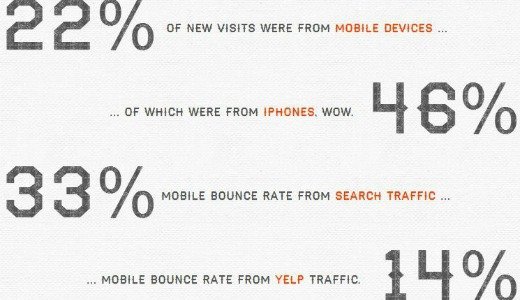
At the time this article was originally published, several statistics illustrated how much the Internet was already influencing restaurant choices:
- Mobile devices were becoming an increasingly important source of restaurant website traffic.
- Email marketing was producing a strong return on investment.
- Consumers were increasingly researching restaurants online before deciding where to eat.
- More than one-third of consumers preferred to read online reviews before choosing a restaurant.
- About half of consumers used search engines to find restaurants.
- Customers expected restaurant websites to provide accurate pricing.
Keep the Website Useful
The most important lesson is simple: a restaurant website doesn’t need unnecessary effects to make an impression. It needs to answer potential customers’ questions quickly and clearly.
Turn Off the Background Music
Your taste in music may be excellent, but it won’t necessarily match your visitors’ tastes. Automatically playing audio can quickly become an annoyance rather than an enhancement.
Source: Ultimate Restaurant Website Design Guide: Forget About Diet Constantly